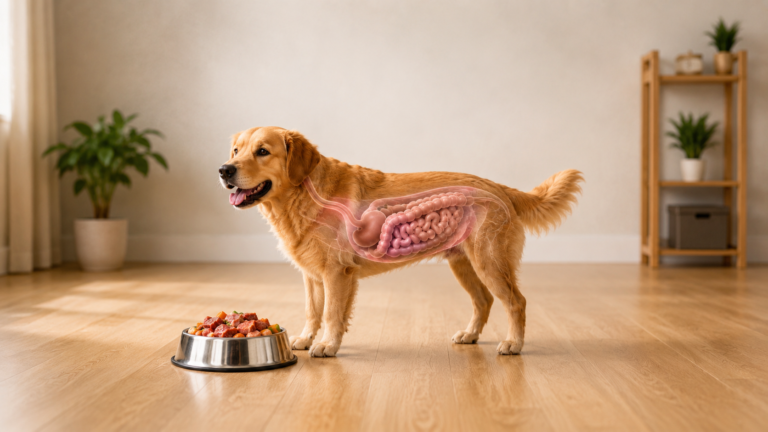
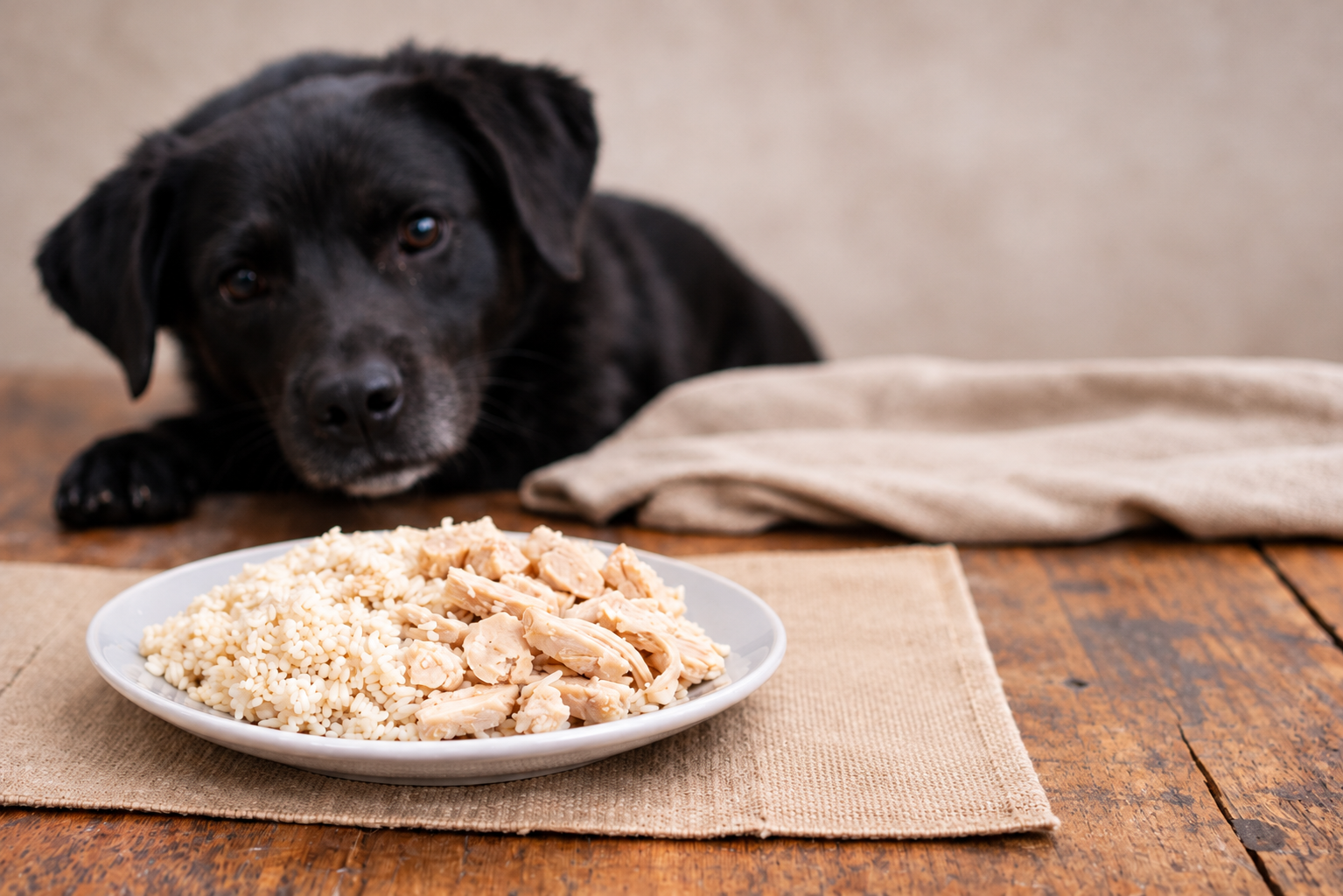
Anyone who owns a dog knows that queasy feeling: you walk into the kitchen in the morning, and one look at the floor says it all. Diarrhoea in dogs is one of the most common reasons why dog owners worry – and quite understandably so. But before you panic: in many cases, there is no serious health issue behind it, and with the right home remedies, you can gently and effectively support your dog’s sensitive digestive system.
Why do dogs get diarrhoea?
Gastrointestinal problems in dogs can have many causes. The most common are:
- Changing food – If the diet is changed too abruptly, the digestive tract often reacts with loose stools or diarrhea
- Stress – Moving, having guests, or a new roommate can upset the balance of your gut
- Spoiled food or food from the trash can – the classic trigger
- Bacteria or viruses – A concern, especially during the warmer months
- Sensitive stomach – Some dogs are simply more sensitive to certain ingredients
The good news: Mild, short-term diarrhea in dogs is often harmless and usually goes away on its own within one or two days—especially if you take specific steps to address it.
When should I take my pet to the vet?
Before we get to the home remedies, here’s an important note: Certain situations always require a visit to the vet—no ifs, ands, or buts:
- Blood in the stool (red or black and tarry)
- Diarrhea that lasts longer than 48 hours
- Severe weakness, tremors, or loss of consciousness
- Puppies or very old dogs—they can become dehydrated more quickly
- Persistent vomiting over an extended period of time
- Suspected poisoning
If none of these warning signs apply, you can start by helping your dog at home. Here are the three most effective methods.
Tip 1: Morosche carrot soup – the underrated home remedy
What’s behind it?
Moro’s carrot soup is not some new-fangled fad, but a home remedy over 100 years old for treating diarrhea in dogs (and humans). Developed by the Munich pediatrician Ernst Moro, it was originally used to treat infant diarrhea—with impressive results.
The secret lies in the long cooking process: when carrots are cooked for hours, special sugar molecules—known as oligosaccharides—are formed. These molecules bind to receptors on the intestinal wall, preventing harmful bacteria—such as certain strains of E. coli—from attaching themselves there and causing damage. The result: less diarrhea and a calmer gut.
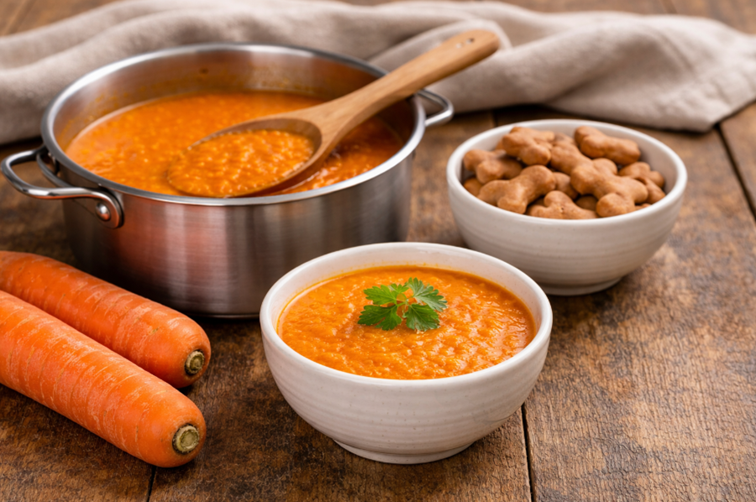
The Recipe
- 500 g carrots, peeled and roughly chopped
- 1 liter of water
- Simmer for at least 90 minutes over medium heat (no less—the cooking time is crucial!)
- Then purée with a hand blender until smooth
- Top up with boiled water to make 1 liter
- You can add a pinch of salt
- Feed in small portions—2–4 times a day, depending on the dog’s size
The soup will keep in the refrigerator for up to three days. By the way, many dogs really enjoy it—they love the natural sweetness of the carrots.
If you don’t have time to make the soup yourself, you can also buy it ready-made. This is a practical solution, especially for working dog owners or in emergencies.
🛒 Click here for the ready-made Morosche carrot soup from our shop → Morosche Carrot Soup 390g – Dietary Supplement | Shop ANIfit
Tip 2: Activated charcoal – quick relief from toxins in the gut
How does activated carbon work?
Activated carbon is a fine, black powder produced from organic materials—such as coconut shells or wood—through a special heating and activation process. What makes it unique is that its surface is extremely porous and can literally “absorb” and bind toxins, bacterial toxins, and other harmful substances.
In the intestines, activated charcoal acts like a sponge: it attracts the substances that cause or worsen diarrhea and carries them out of the body in a bound form. In human medicine, activated charcoal has been used successfully for decades to treat poisoning and gastrointestinal complaints.
Activated charcoal for dogs – is it worth it?
Yes – in cases of mild diarrhea caused by spoiled food or bacteria, activated charcoal can be a helpful remedy for dogs. It is important to use the correct dosage, which depends on the dog’s body weight.
There are special activated charcoal products for dogs that are already properly dosed and tailored to their needs.
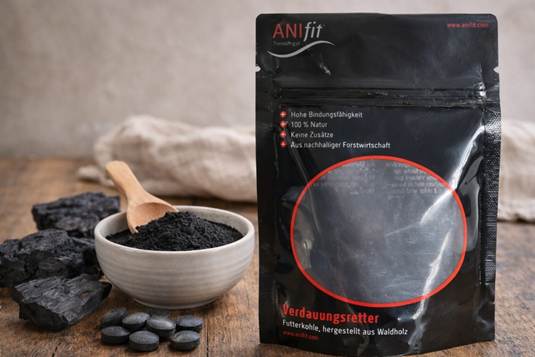
🛒 Click here to view our activated charcoal for dogs → Order/buy Digestive Relief 30g (1 pack): Online Store
Note: Activated charcoal should not be given on a long-term basis or in combination with medications, as it can affect their effectiveness. If in doubt, consult your veterinarian.
Tip 3: A gentle diet – rice and chicken for an irritated gut
Why Your Digestive System Needs a Break
When a dog’s digestive system is out of balance, less is often more. Many veterinarians recommend a short-term fast of 12 to 24 hours to allow the intestines to recover. Fresh water should always be available.
After that, the light diet phase begins—and here, one combination has proven effective for decades:
The tried-and-true recipe for a light diet
Cooked rice + cooked chicken
- Boil skinless, boneless chicken breasts in water (without seasoning or oil)
- Cook the white rice separately and make sure it is thoroughly cooked
- Mix in a ratio of 2 parts rice to 1 part meat
- Feed in small portions throughout the day (4–5 times a day instead of 1–2 large meals)
Why does this work so well?
- White rice is easy to digest and contains very little fiber—it is gentle on an irritated digestive tract
- Chicken is low in fat and easy to digest—it provides protein without putting additional strain on the digestive system
- This combination is mild and suitable for almost any dog
- After 2–3 days, you can gradually switch back to the regular food
Tip: If your dog refuses to eat the bland diet, you can pour some chicken broth (without onions or salt) over the food.
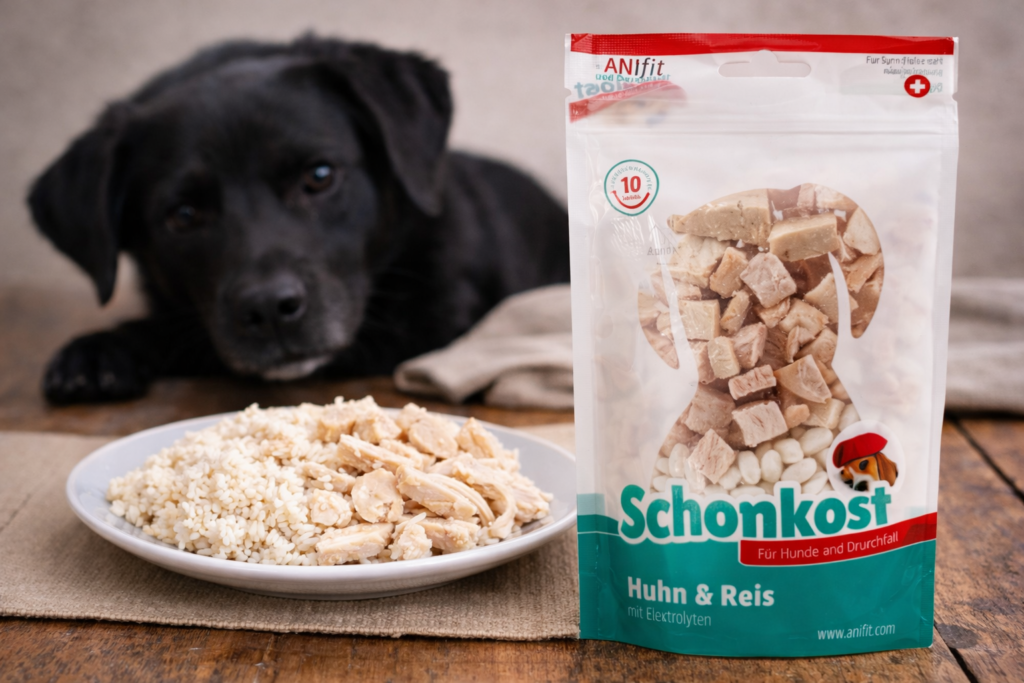
🛒 Click here to view the ready-made light diet from our shop → Light Diet Chicken & Rice 50g – Dog Supplement | Anifit
More helpful tips
In addition to these three main steps, there are a few simple things you can do to help your dog recover more quickly:
- Make sure to provide plenty of fresh water—diarrhea can lead to dehydration. Always have fresh water available and make sure your dog drinks it.
- Electrolytes – In more severe cases, special electrolyte solutions for dogs can help restore electrolyte balance.
- Give them some rest – no rough play, no running around. A quiet day is good for both the dog and its digestive system.
- Adjust walks – Opt for short, leisurely walks instead of long hikes, so the dog still gets exercise but isn’t overexerted.
Conclusion: Diarrhea in dogs is often no cause for panic
Unfortunately, diarrhea in dogs is almost a daily occurrence for dog owners. The good news is that in many cases, simple, tried-and-true home remedies are very effective in treating diarrhea in dogs.
- Moro’s carrot soup addresses the root cause and soothes the digestive system naturally
- Activated charcoal binds toxins and helps the body eliminate them
- A light diet of rice and chicken eases the strain on the digestive system and gives it time to recover
If you want to be well-prepared as a dog owner, it’s a good idea to have the essentials on hand—before the next bout of diarrhea strikes.
If you want to help your dog quickly when they have gastrointestinal issues, you’ll find carefully selected products for dogs with sensitive stomachs in our shop. From ready-to-serve Moroschen carrot soup to activated charcoal specially formulated for dogs—everything you need to keep your dog’s stomach happy.
🛒 Discover our shop now → shop.gesunderhund.online | Dog food & cat food from Anifit
This article is for general information purposes only and is not a substitute for veterinary advice. If symptoms persist or are severe, always consult a veterinarian.