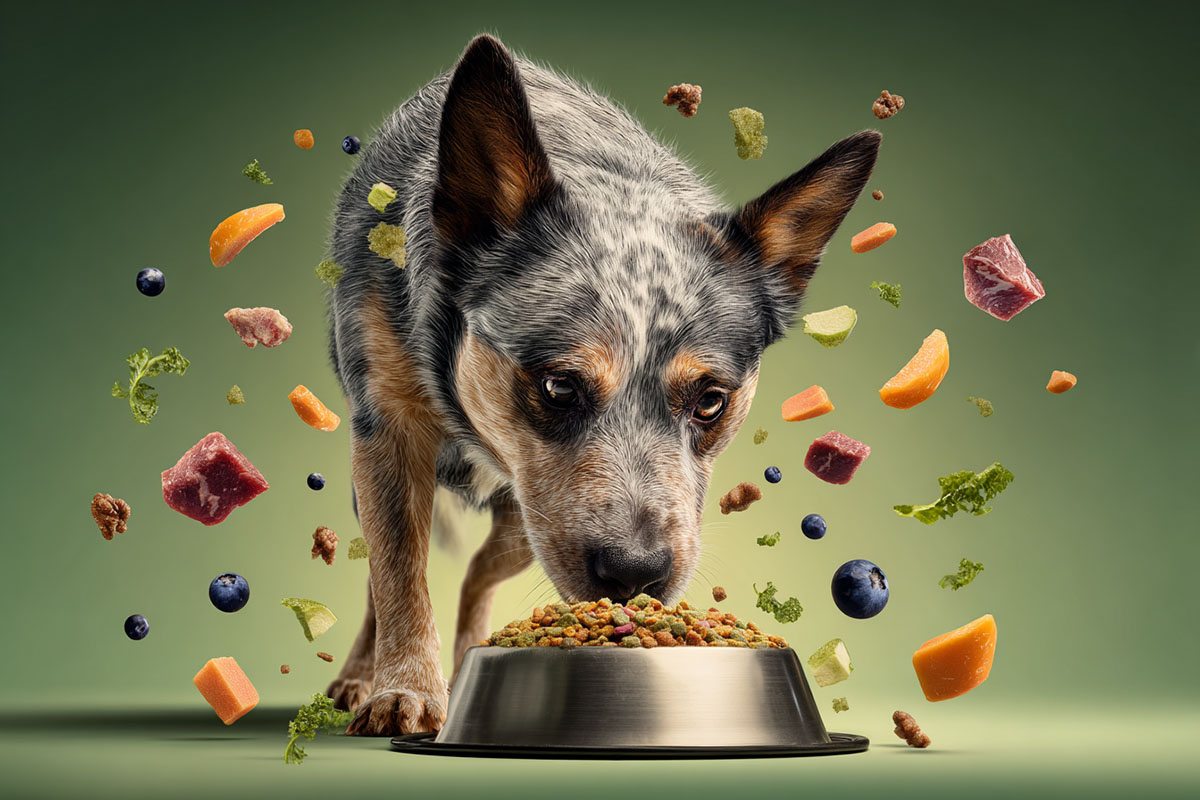
A balanced and species-appropriate diet is one of the most important foundations for a long, active, and healthy dog’s life. What dogs eat every day directly affects their energy levels, digestion, immune system, skin, coat, and overall wellbeing.
Yet many dog owners feel overwhelmed by the variety of food options available — dry food, wet food, raw feeding, cooked meals, supplements, grain-free formulas, and more.
This guide explains the basics of healthy dog nutrition in a clear and practical way.
Why Nutrition Matters for Dogs
Dogs rely entirely on their owners to make the right nutritional choices. Unlike humans, they cannot balance deficiencies or excesses on their own.
Poor nutrition can contribute to:
- Digestive issues
- Skin and coat problems
- Food intolerances
- Obesity or underweight
- Reduced energy and vitality
- Long-term health problems
A well-balanced diet, on the other hand, supports both physical health and mental stability.
The Core Components of a Healthy Dog Diet
A healthy dog diet is not about trends — it is about balance.
1. High-Quality Protein
Protein is essential for muscles, organs, enzymes, and immune function.
Good protein sources include:
- Chicken
- Turkey
- Beef
- Lamb
- Fish
- Eggs
Protein should always be clearly declared and come from identifiable animal sources.